



Protecting Your Vision with Modern Glaucoma Treatment
Protecting Your Vision with Modern Glaucoma Treatment
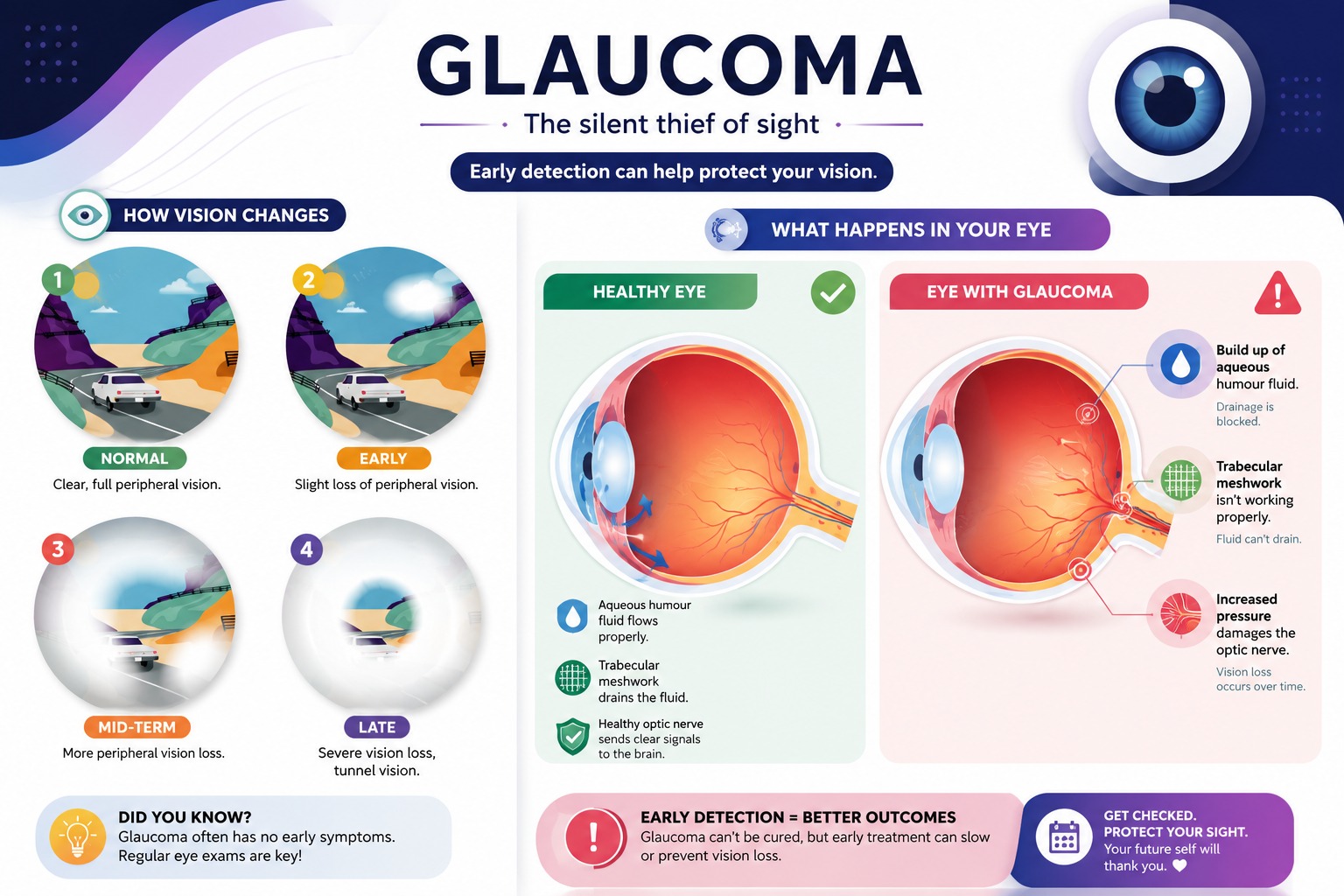
Glaucoma is often called the "silent thief of sight" because it gradually damages the optic nerve without causing noticeable symptoms in its early stages. By the time vision loss becomes apparent, the damage is usually permanent.
Fortunately, advances in ophthalmology have transformed how glaucoma is managed. One of the most significant breakthroughs is Minimally Invasive Glaucoma Surgery (MIGS), a modern surgical approach designed to lower eye pressure with less trauma, faster recovery, and a significantly improved safety profile compared to conventional glaucoma surgery.
At Sunway Medical Centre Ipoh, Dr. Ch'ng Tun Wang, Consultant Ophthalmologist & Glaucoma Surgeon, offers comprehensive glaucoma diagnosis and personalised treatment plans, including the latest minimally invasive surgical techniques to help patients preserve their vision and maintain their quality of life.
What is Glaucoma?
Glaucoma is a group of eye diseases that damage the optic nerve, usually due to elevated pressure inside the eye (intraocular pressure). Without timely treatment, glaucoma can lead to irreversible vision loss and even blindness. Treatment aims to reduce eye pressure, thereby protecting the optic nerve from further damage. Many patients experience no warning signs until the disease has progressed.
"Glaucoma causes permanent vision loss, but early detection and appropriate treatment can slow or even prevent further damage. Regular eye examinations remain the best defence against this silent disease," says Dr. Ch'ng Tun Wang.
Minimally Invasive Glaucoma Surgery (MIGS): A Safer, Faster Approach to Glaucoma Treatment
Minimally Invasive Glaucoma Surgery (MIGS) refers to a group of innovative surgical procedures developed to reduce eye pressure while minimising disruption to the eye's natural anatomy.
Unlike traditional glaucoma surgeries, MIGS uses microscopic instruments and tiny incisions typically only 1 to 2 millimetres to improve the eye's natural fluid drainage system.
The result is effective pressure reduction with faster recovery and fewer complications.
"MIGS was developed to bridge the gap between glaucoma medications and traditional glaucoma surgery. It allows us to treat suitable patients earlier with a procedure that is both effective and considerably less invasive," explains Dr. Ch'ng Tun Wang.
Why is MIGS Becoming the Preferred Option?
Modern glaucoma management focuses not only on lowering eye pressure but also on improving patients' comfort, recovery, and long-term quality of life.
- Excellent Safety Profile
One of the biggest advantages of MIGS is its outstanding safety record.
Compared with conventional glaucoma surgery, MIGS carries a much lower risk of complications such as:
.png) Excessively low eye pressure (hypotony)
Excessively low eye pressure (hypotony) Significant bleeding
 Infection
 Extensive scarring
 Prolonged recovery
"Patient safety is one of the major reasons MIGS has become increasingly popular. For carefully selected patients, it offers an excellent balance between effectiveness and safety," says Dr. Ch'ng Tun Wang.
- Minimally Invasive Procedure
MIGS involves only tiny self-sealing incisions that require minimal manipulation of surrounding tissues.
Benefits include:
 Less surgical trauma
 Minimal discomfort
 Reduced inflammation
 Faster healing
 Earlier return to daily activities
Most patients recover within a few days to one week, significantly quicker than with conventional glaucoma surgery.
- Performed from Inside the Eye (Ab Interno Technique)
Most MIGS procedures are performed using an ab interno approach, meaning the surgeon operates from inside the eye through a tiny corneal incision without creating a large external surgical wound.
This preserves the eye's natural tissues while reducing recovery time.
"The ab interno technique allows us to improve the eye's drainage system while preserving the conjunctiva, which is particularly valuable should future glaucoma procedures ever become necessary," explains Dr. Ch'ng Tun Wang.
- Can Be Combined with Cataract Surgery
Many patients diagnosed with glaucoma also develop cataracts as they age.
An important advantage of MIGS is that it can often be performed during the same operation as cataract surgery.
This offers several benefits:
 One surgical session
 One anaesthetic
 Faster overall recovery
 Reduced healthcare visits
 Simultaneous treatment of two eye conditions
For many patients, combining cataract surgery with MIGS improves convenience while enhancing long-term eye pressure control.
Understanding Trabecular Bypass Stents
Among the most performed MIGS procedures is the use of a Trabecular Bypass Stent.
This tiny medical implant is carefully positioned within the eye's natural drainage channel (trabecular meshwork).
Its purpose is to bypass areas of blockage, allowing fluid to drain more efficiently and reducing intraocular pressure.
Because the implant is extremely small, patients typically do not feel or notice its presence after surgery.
"Trabecular bypass stents work by restoring the eye's natural drainage pathway rather than creating an entirely new one. This makes the procedure both elegant and minimally disruptive," says Dr. Ch'ng Tun Wang.
Who is a Suitable Candidate for MIGS?
MIGS is generally recommended for patients with:
- Mild to moderate open-angle glaucoma
- Early glaucoma requiring better pressure control
- Patients undergoing cataract surgery who also have glaucoma
- Individuals wishing to reduce dependence on daily glaucoma eye drops
- Patients whose eye pressure remains above target despite medication
While MIGS is highly effective, it may not be suitable for advanced glaucoma, where more intensive surgical procedures may be required.
"Every glaucoma patient is different. The most appropriate treatment depends on the severity of the disease, eye pressure, overall eye health, and the patient's lifestyle and treatment goals," advises Dr. Ch'ng Tun Wang.
Why Early Treatment Matters
Vision lost from glaucoma cannot be restored.
However, early diagnosis and timely treatment can preserve remaining vision for many years.
Routine comprehensive eye examinations become increasingly important after the age of 40, especially for individuals with:
 A family history of glaucoma
 Diabetes
 High eye pressure
.png) High myopia (short-sightedness)
High myopia (short-sightedness) Previous eye injuries
"The earlier glaucoma is diagnosed, the more options we have to protect vision. Waiting until symptoms develop often means permanent vision has already been lost," emphasises Dr. Ch'ng Tun Wang.
About the Author
Dr. Ch'ng Tun Wang is a Consultant Ophthalmologist & Glaucoma Surgeon at Sunway Medical Centre Ipoh with a special interest in the diagnosis and management of glaucoma, cataracts, and other eye conditions. Committed to preserving vision through early detection and evidence-based care, Dr. Ch'ng provides personalised treatment using advanced medical and surgical techniques, including Minimally Invasive Glaucoma Surgery (MIGS). He is dedicated to helping patients achieve the best possible visual outcomes while improving their long-term quality of life.
← Back