



ICL vs LASIK: Which Vision Correction Option Is Right for You?
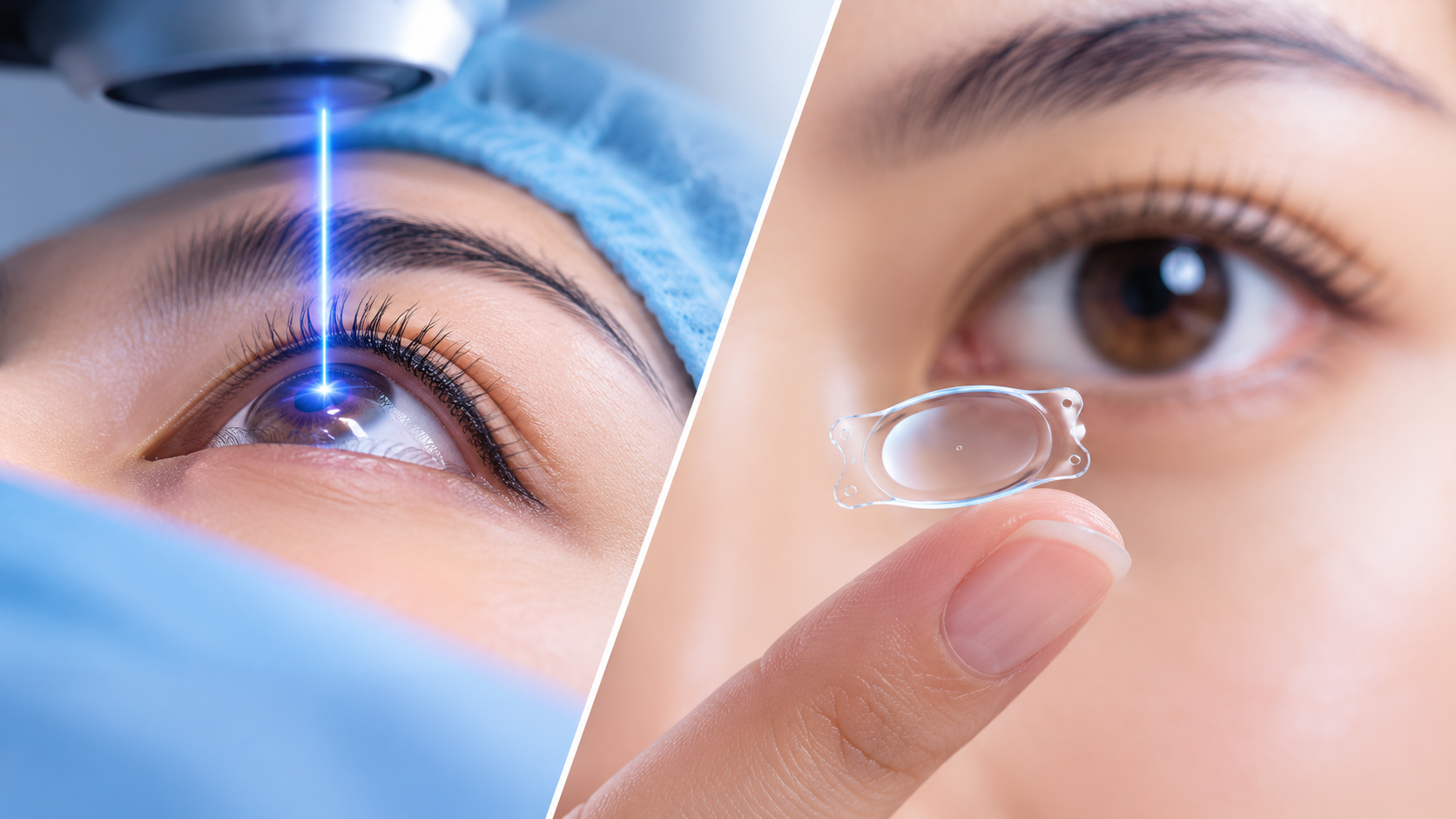
For many people with short-sightedness (myopia), glasses and contact lenses are part of everyday life. While laser vision correction such as LASIK has helped millions of people reduce their dependence on glasses, it may not be suitable for everyone particularly those with high myopia, thinner corneas or certain corneal conditions.
Implantable Collamer Lens (ICL) offers another option for vision correction. Rather than reshaping or removing corneal tissue, ICL involves placing a soft, biocompatible lens inside the eye, behind the iris and in front of the eye's natural lens.
For appropriately selected patients, ICL can provide clear, high-quality vision while preserving the natural structure of the cornea.
"ICL is designed around a simple principle: add the corrective power needed without removing corneal tissue. However, achieving the best outcome depends on careful assessment, precise measurements and appropriate patient selection." - Dr. Abirami Shavani, Consultant Ophthalmology, Cataract & Refractive Specialist
What Is an Implantable Collamer Lens (ICL)?
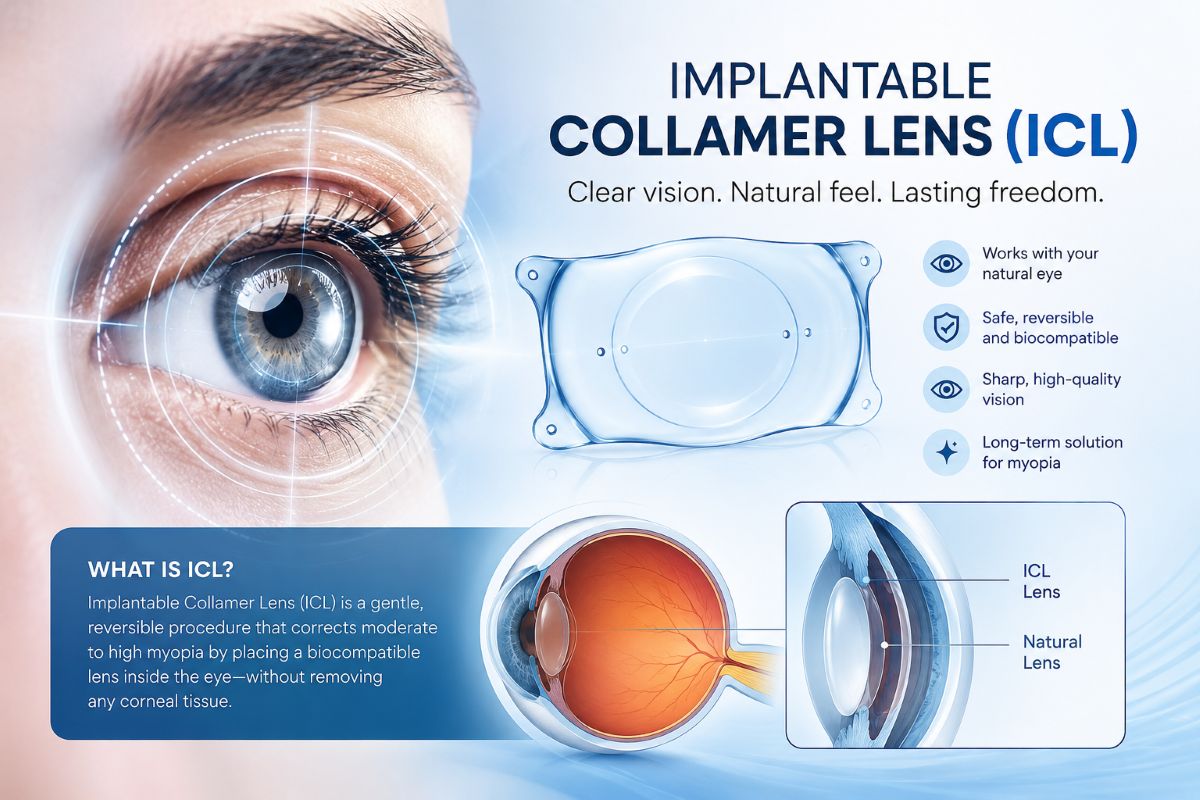
An Implantable Collamer Lens (ICL) is a refractive lens implanted inside the eye to correct refractive errors, particularly moderate to very high myopia.
Unlike LASIK, which uses a laser to reshape the cornea, ICL does not require corneal cutting, flap creation or removal of corneal tissue.
The lens is positioned behind the iris and in front of the natural crystalline lens. Once implanted, it works with the eye's natural optical system to focus light correctly onto the retina.
The lens is made from a biocompatible material known as Collamer, designed for implantation within the eye.
How ICL Differs from Laser Vision Correction
The fundamental difference between ICL and LASIK is where vision correction takes place.
| Implantable Collamer Lens (ICL) | LASIK |
|---|---|
|
|
This makes ICL an important alternative for patients who may not be suitable candidates for laser refractive surgery.
Key Advantages of ICL
- No Corneal Cutting or Reshaping
One of the defining advantages of ICL is that the procedure does not involve reshaping the cornea.
For patients who may have concerns about corneal tissue removal or who have corneal characteristics that make laser correction less suitable, ICL may provide an alternative approach.
- Preserves Natural Corneal Thickness and Biomechanics
Because ICL does not remove corneal tissue, the natural corneal structure is preserved.
This can be particularly relevant when evaluating patients with high prescriptions or thinner corneas, where the amount of tissue that would need to be removed during laser correction may be an important consideration.
- High-Quality Visual Outcomes
ICL can provide excellent visual acuity and may offer high-quality vision, particularly in appropriately selected patients with high myopia.
Vision quality is not simply about achieving a good number on an eye chart. Factors such as contrast sensitivity, optical quality and the patient's visual needs also matter when considering refractive surgery.
- An Option for Some Patients Not Suitable for LASIK
Not everyone is a suitable candidate for LASIK.
Patients with factors such as relatively thin corneas or prescriptions outside the practical range of certain laser procedures may be evaluated for ICL instead.
However, being unsuitable for LASIK does not automatically mean that a patient is suitable for ICL. The eye must undergo a comprehensive assessment before treatment can be recommended.
Who May Be Suitable for ICL?
ICL may be considered for carefully selected patients who have:
The final decision is based on the patient's eye anatomy, prescription, age, ocular health, expectations and suitability for the procedure.
"Refractive surgery should never be approached as a one-size-fits-all treatment. Two patients with the same spectacle prescription may have very different corneal thickness, anterior chamber dimensions and ocular health. These differences matter when choosing the safest and most appropriate procedure." - Dr. Abirami Shavani
Who May Not Be Suitable for ICL?
Although ICL can be an effective refractive option, it is not appropriate for everyone.
Patients may not be suitable if they have:
- Shallow Anterior Chamber
Adequate space within the eye is important for safe positioning of the implant. An insufficient anterior chamber depth may increase procedural risks.
- Active Eye Disease
Before considering any procedure even LASIK, uncontrolled ocular condition should be appropriately evaluated and managed before considering elective refractive surgery.
- Significant Cataract
ICL is primarily a refractive procedure for patients with a clear natural lens. Patients with significant cataract may require a different lens-based treatment approach.
- Endothelial Compromise
The corneal endothelium plays an important role in maintaining corneal clarity. Adequate endothelial health is an important consideration before intraocular lens implantation.
A detailed examination is therefore essential before determining whether ICL is appropriate.
Comprehensive Preoperative Assessment: Why Precision Matters
The success of an ICL procedure depends not only on the surgical technique but also on accurate measurements and careful patient selection.
Before undergoing ICL, patients should undergo a comprehensive ophthalmic assessment.
At Sunway Medical Centre Ipoh, advanced diagnostic technologies can be used to evaluate the cornea, anterior segment, eye dimensions, refractive error and overall ocular health.
- Corneal and Anterior Segment Analysis
Pentacam HR
Pentacam HR provides detailed corneal tomography and anterior segment measurements. It can help assess:
- Corneal shape and curvature
- Anterior chamber depth
- Corneal thickness
- Corneal topography
- Corneal abnormalities
- Keratoconus-related changes
This information is particularly useful when determining whether a patient is better suited for corneal laser correction or an alternative refractive procedure.
Anterior Segment OCT
Anterior Segment Optical Coherence Tomography (AS-OCT) provides detailed imaging of the structures at the front of the eye.
It can contribute additional anatomical information during preoperative assessment and surgical planning.
Endothelial Health Assessment
Specular Microscopy may also be performed to assess the health and condition of the corneal endothelial layer, providing important information when evaluating suitability for ICL implantation.
- Biometry and ICL Sizing
Accurate measurements are critical when selecting the appropriate ICL size.
Optical Biometry
Devices such as the IOLMaster or Lenstar can measure important eye dimensions, including axial length.
White-to-White Measurement
The horizontal diameter of the cornea, commonly referred to as the white-to-white measurement, can contribute to lens sizing and surgical planning.
Sulcus Sizing
In selected cases, additional measurements may be considered to assess the dimensions of the ciliary sulcus, where the ICL is positioned.
Ultrasound Biomicroscopy (UBM) provides a dedicated assessment of sulcus dimensions to support appropriate ICL sizing.
"When it comes to ICL, measurement is fundamental. The goal is not simply to correct the prescription it is to select a lens that is appropriate for the individual anatomy of the eye." - Dr. Abirami Shavani
- Refraction and Functional Vision Assessment
A detailed refractive assessment is performed to establish the patient's prescription accurately.
This may include:
- Manifest refraction
- Cycloplegic refraction
- Best-corrected visual acuity
- Uncorrected visual acuity
- Contrast sensitivity
- Pupil size assessment
These measurements help the ophthalmologist understand not only the patient's prescription but also their functional visual requirements.
- Assessment of Overall Intraocular Health
Before an elective intraocular procedure, the overall health of the eye must be carefully evaluated.
This may include:
Slit-Lamp Examination
A slit-lamp examination allows detailed assessment of the cornea, anterior chamber, iris, natural lens and other structures at the front of the eye.
Intraocular Pressure
Measuring intraocular pressure helps identify abnormalities that may require further evaluation.
Dilated Fundus Examination
The retina and optic nerve are examined to identify conditions that may affect vision or require treatment before refractive surgery.
Gonioscopy
Gonioscopy may be performed when clinically indicated to evaluate the drainage angle of the eye.
ICL vs LASIK: Which Is Better?
There is no single refractive procedure that is best for everyone.
The choice between ICL and LASIK depends on factors such as refractive error, corneal thickness and shape, tear film and dry eye status, anterior chamber anatomy, age, ocular health and individual expectations.
| Feature | ICL | LASIK |
|---|---|---|
| Main approach | Corrective lens implanted inside the eye | Cornea reshaped using laser |
| Corneal tissue | Preserved | Tissue is removed/reshaped |
| Corneal flap | No | Yes |
| Suitable for high myopia | Can be an option for moderate to very high myopia | Suitability depends on prescription and corneal parameters |
| Astigmatism | Yes | Yes |
| Reversibility | Lens can potentially be removed or exchanged, requiring surgery | Permanent corneal reshaping |
| Dry-eye considerations | Generally less corneal nerve disruption | Dry eye can occur following treatment |
| Key planning factor | Accurate intraocular sizing and anatomy | Corneal thickness, shape and tissue availability |
Importantly, ICL should not be viewed as simply a "better LASIK." They are different approaches to refractive correction, each with its own indications, benefits and risks.
The appropriate treatment should be determined after a comprehensive assessment by an ophthalmologist.
Does ICL Mean There Is No Laser or Corneal Flap?
Yes.
One of the defining characteristics of ICL is that the cornea is not reshaped with an excimer laser and there is no LASIK-style corneal flap.
Instead, a small surgical opening is made to allow the lens to be inserted into the eye and positioned appropriately.
This means ICL provides a fundamentally different approach to vision correction: the corrective power is added inside the eye rather than achieved by removing corneal tissue.
Is ICL Reversible?
ICL is often described as a reversible refractive procedure because the implanted lens can potentially be removed or exchanged.
However, this does not mean that ICL is reversible in the same way as simply removing a pair of glasses or contact lenses.
Removal or exchange requires another intraocular surgical procedure.
Therefore, patients should consider ICL as a long-term vision correction solution, rather than a temporary treatment.
The decision to remove or exchange an ICL may depend on factors such as changes in prescription, ocular health, lens-related considerations or other clinical circumstances.
What Can Patients Expect After ICL?
For appropriately selected patients, the goals of ICL include:
- Greater Spectacle Independence
Many patients seek ICL because they want to reduce their dependence on glasses or contact lenses for everyday activities.
- Clearer Vision
The corrective lens is designed to provide the optical correction required for the patient's refractive error.
- Improved Quality of Life
Reduced dependence on spectacles may make activities such as sports, travel, social activities and daily routines more convenient.
However, no refractive procedure can guarantee perfect vision or permanent spectacle independence for every patient.
Vision can naturally change over time, and age-related conditions such as presbyopia and cataract may eventually affect the need for glasses.
Precision-Driven ICL Care
At Sunway Medical Centre Ipoh, ICL assessment and planning are supported by a comprehensive diagnostic approach designed to provide detailed information about each patient's eyes.
This includes access to advanced imaging and measurement technologies such as:
- Pentacam HR for corneal tomography and anterior segment analysis
- Optical biometry for accurate eye measurements
- Anterior Segment OCT for detailed anterior segment imaging
- Comprehensive refractive assessment
- Detailed intraocular health evaluation
- Individualised ICL sizing and surgical planning
- Accredited operating theatre facilities
The focus is not simply on treating a spectacle prescription, but on understanding the individual eye and planning treatment with precision.
"Our approach is to measure more, understand the eye better and make decisions based on the patient's individual anatomy. Precision begins before the surgery itself." - Dr. Abirami Shavani
About the Author
Dr. Abirami Shavani provides specialist ophthalmic care with an interest in cataract and refractive solutions, including vision correction options for patients seeking greater independence from glasses and contact lenses.
← Back