



Test is ‘normal’, but I’m not
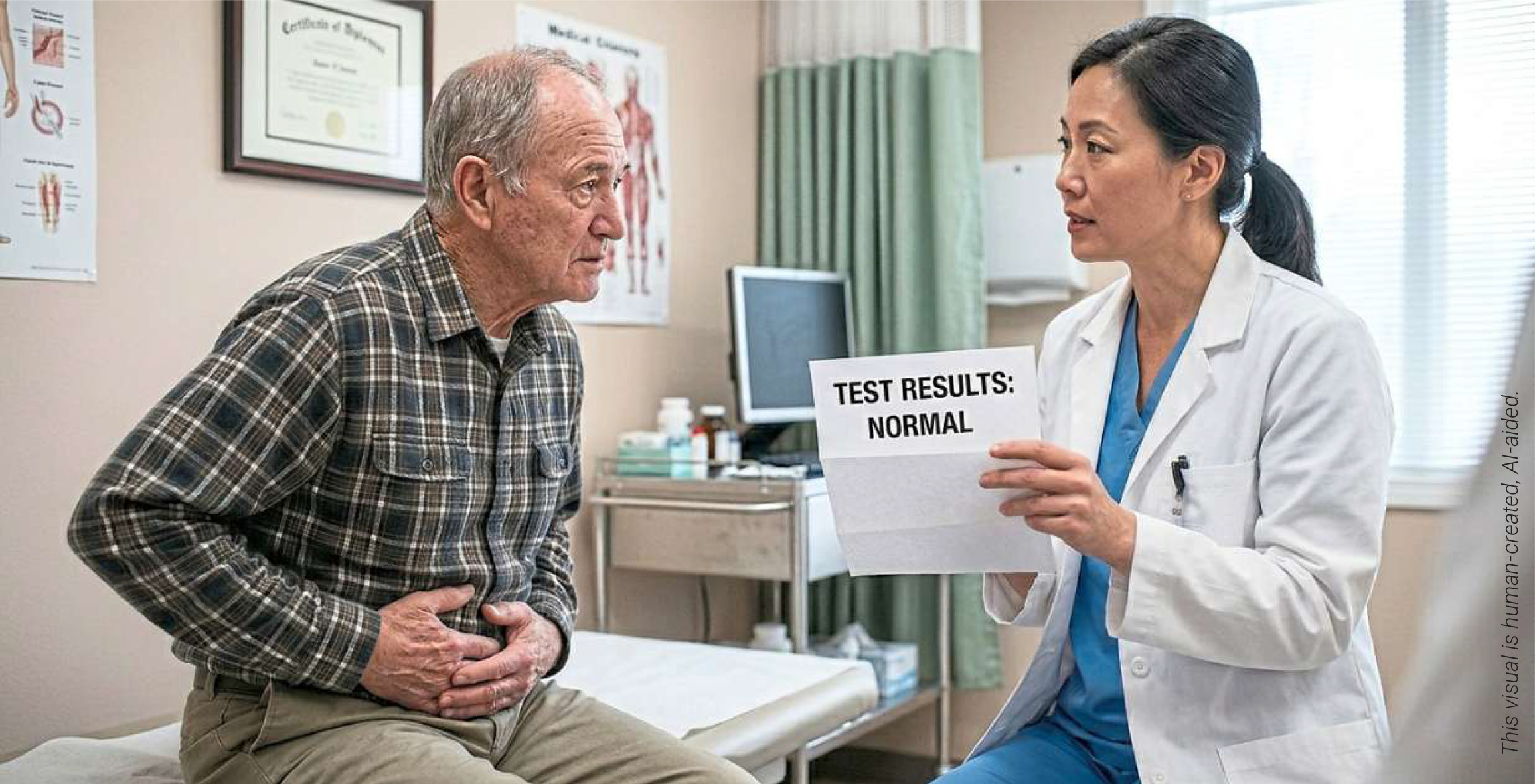
In modern medicine, a “normal” endoscopy is often considered good news. It rules out serious conditions, e.g. ulcers, cancers and significant inflammation. From a clinical standpoint, it is a success. But for a subset of patients, normal results do not bring closure; they bring confusion.
The article highlights a common issue faced by many patients who continue to experience digestive symptoms despite receiving normal medical test results. Through the story of a 42-year-old executive suffering from persistent upper abdominal discomfort, Dr Khairul explains that a normal endoscopy can rule out serious conditions such as ulcers, cancer, or significant inflammation, but it does not necessarily mean that the patient is free from illness.
Many gastrointestinal disorders, such as functional dyspepsia and irritable bowel syndrome (IBS), do not cause visible abnormalities that can be detected through routine investigations. These conditions are linked to how the gut functions rather than how it appears structurally. Factors such as visceral hypersensitivity, gut motility issues, changes in gut microbiota, and the brain-gut connection can all contribute to symptoms that are real but invisible on scans and endoscopies.
The article also discusses the psychological burden patients face when tests come back normal while symptoms persist. Without proper explanation, patients may feel dismissed, confused, or begin doubting their own experiences. Dr Khairul emphasizes that doctors should communicate more effectively by acknowledging that symptoms are real, even when tests show no structural disease.
Ultimately, the article stresses that medicine is not only about detecting disease but also about helping patients understand and manage conditions that cannot always be seen. A normal test result is reassuring because it excludes serious illness, but it should not invalidate a patient's symptoms. Compassionate communication, understanding, and partnership between doctors and patients are essential in navigating these situations.
← Back